Family Language Learning Holiday Programs – How to Choose, Book & Benefit from a Language Immersion Vacation for Families
Educational and Personal Benefits
When a family embarks on a language‐learning holiday, everyone gains more than just holiday memories. Children exposed to language learning through travel can benefit from improved cognitive functions, memory, problem-solving, and even broader thinking because immersive settings accelerate acquisition. Reports show that “study after study has proved the benefits of learning languages at a young age,” especially when on holiday in the country itself.
Parents also benefit: improving or renewing language skills, connecting with their children in a shared goal, and gaining confidence in speaking. Moreover, the cultural exposure deepens understanding and strengthens family bonds through shared new experiences.
Solving Common Holiday Challenges
Standard holidays may lack educational value or might not engage children meaningfully. Families often struggle with finding a trip that includes both fun and growth. Language learning holiday programs solve this by embedding structured language lessons (or immersive activities) into the travel experience so the holiday becomes more than just relaxation. Families get both the quality time and the developmental component.
Also, it helps families who want children to continue learning over the break or want to use the holiday time productively. Instead of downtime without purpose, the program gives a meaningful structure while still offering leisure activities.
How to Choose the Right Program for Your Family
Key Criteria for Selection
When selecting a program to book a family language learning holiday, consider the following:
-
Age appropriateness and group composition: Does the program cater to both children and adults? Are the lessons and activities tailored for families (rather than just adult learners)? For example, one provider offers a “Parents and Kids” program in Antibes, France, with morning classes for children and optional adult courses for parents.
-
Destination and immersion level: Is the destination a genuine environment where the language is spoken and can be practised outside class? Immersion is stronger when you stay in-country rather than only classroom.
-
Accommodation and logistics: Does the program provide or help arrange family-friendly accommodation near the language centre? How are transfer, meals, and safety managed?
-
Activity balance: Is there a good mix of language learning, culture, leisure, and free time? You want to ensure the holiday doesn’t feel like schoolwork only, but includes fun exploration.
-
Instructor and programme quality: Are teachers native speakers? Are programmes accredited or experienced in family groups? For example, one site advertises “language holidays for children and teenagers” where host families and qualified teachers provide immersion stays.
-
Cost transparency & inclusions: Check what is included (lessons, accommodation, meals, excursions) and what is extra (flights, transfers).
-
Technology and online support: Programs that provide online orientation, family logs, or apps can enhance your experience (more on tech later).
How to Book & Prepare
-
Define your family goals: What language do you want to learn? How many days? What age of kids? What comfort level?
-
Browse providers: Look for “family language holiday programmes” in your destination of interest. The provider list below will help.
-
Request sample itineraries: See morning lesson blocks, afternoon family activities, and free time.
-
Confirm age groups and children’s supervision: If your children are younger, make sure there is appropriate support.
-
Book early: Family‐oriented language holiday programs can have limited spaces, especially in summer.
-
Pre-travel orientation: Read basic vocabulary, talk as a family about what to expect, and set realistic expectations.
-
Arrange travel & accommodation: If flights are not included, book early. Make sure the family location is suitable and safe.
-
Pack appropriately: Consider notebooks, comfortable clothes, and activities for the afternoons and evenings.
-
Set family roles: Decide together that mornings will be lessons or immersion, afternoons free / exploring; make family commitments to practise and engage.
Real‐World Family Language Learning Holiday Programmes
Here are three high‐quality examples of programs you can book today for families. Each example includes descriptions, benefits, use cases, and bookilinksink.
1. StudyTravel – Language Courses for Families

StudyTravel offers language courses abroad for families, with destinations including France, Italy, Malta, Spain, and the UK. Their programme states: “Travelling abroad, combine your annual vacation with a language course at one of our many destinations worldwide.”
Benefits: This program allows both children and adults to take lessons simultaneously (or children in the morning, parents free their time, or in their own course). Families select from host-family accommodation or private apartments. The emphasis on immersion and culture complements the holiday rather than replacing it.
Use Case / Problem Solved: A family wants to holiday in Spain while also ensuring their children and themselves practise Spanish. StudyTravel provides a structured program where children learn in the morning, and afternoons are free for family outings, so you don’t lose holiday time entirely.
How to Buy / Where to Buy: Visit StudyTravel’s site and search “Language courses for families”. Choose destination, dates, and family group size.
2. Centre International d’Antibes (France) – “Parents & Kids” Programme
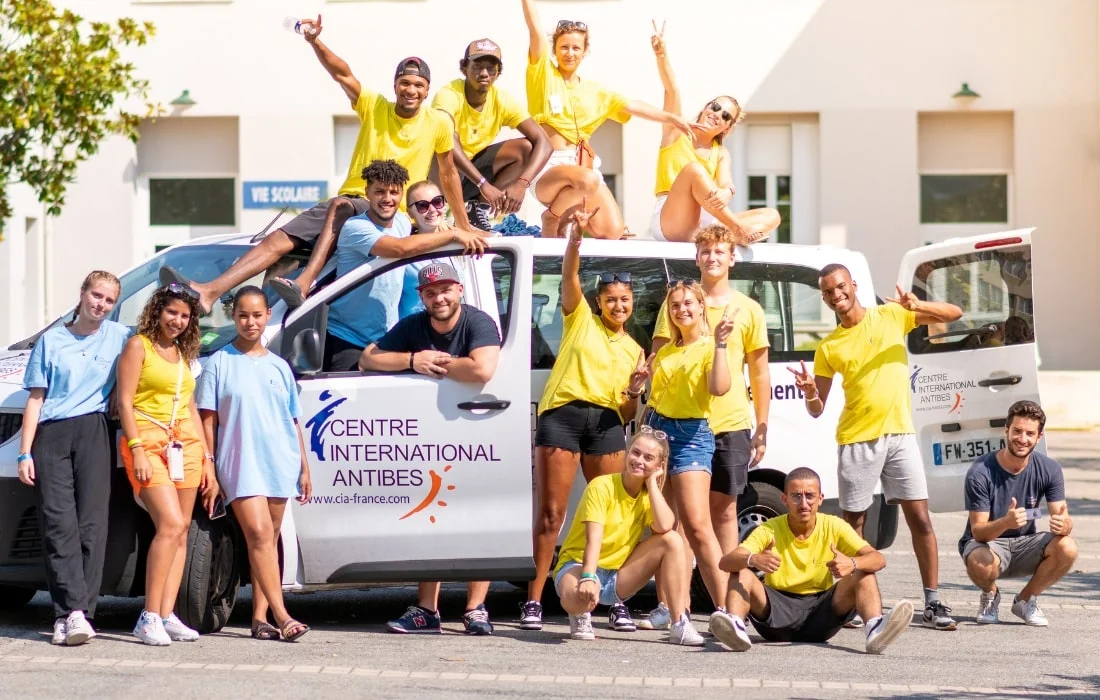
The Centre International d’Antibes offers a specific “Parents and Children” program in Antibes on the French Riviera, designed for families to learn French together. The scheme allows children to attend morning classes, while parents choose their own course or enjoy free time. Accommodation options include family apartments or a residence.
Benefits: This offers a high‐quality location (French Riviera) and a strong family focus. By staying together in family accommodation while everyone engages in language learning (or free time for parents), it ensures a unified family experience.
Use Case / Problem Solved: Parents may want to brush up on their French, to,o or share an experience with kids, this program supports both. For children aged 6-17, this gives a fun, immersive morning learning session, with afternoons and evenings free for family adventure.
How to Buy / Where to Buy: Visit the Antibes school website, select “French courses for families – Parents & Kids programme”, choose dates and accommodation.
3. Concordia Language Villages – Family Weeks & Weekends (USA)
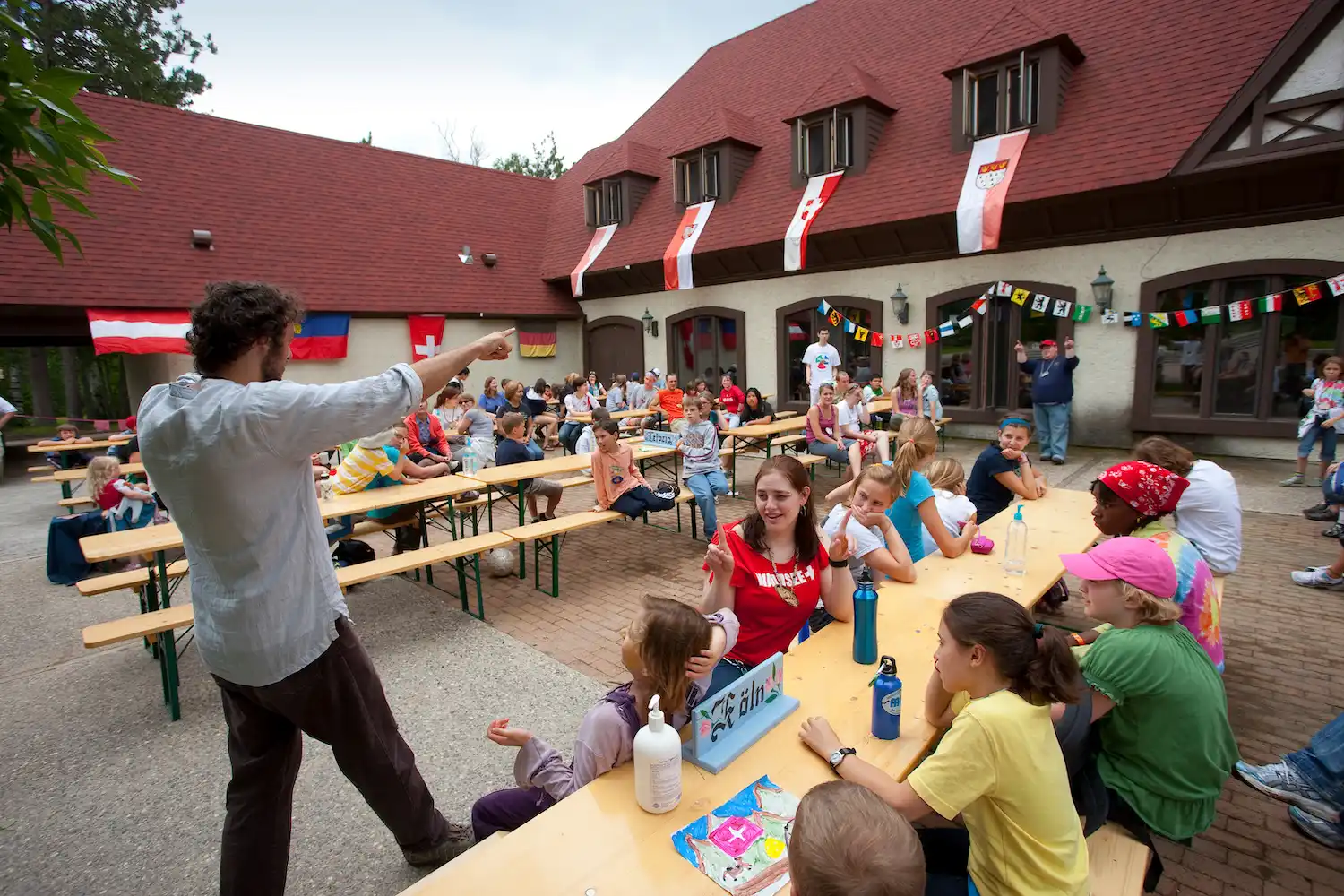
Concordia Language Villages offers tailored “Family Weeks & Weekends” programs where families (adults + children) attend immersive language and culture sessions together in the U.S., with options for French, German, Spanish, Japanese, and more.
Benefits: This is ideal for families who might not travel abroad but still want t immersion experience. It provides a setting where the family lives in a cultural “village” and engages in language and cultural activities together, making it both a learning and a holiday.
Use Case / Problem Solved: A family living in the U.S. wants a language holiday but cannot take a full trip abroad. This program offers a convenient, lower-logistics barrier option while still combining immersion and family bonding.
How to Buy / Where to Buy: Visit Concordia’s website, choose the Family Weeks & Weekends program section, select the language, date, and register.
4. Homestay & Language Exchange Service – Linguifamily

Linguifamily is a trusted platform connecting families with host teachers and homestay families across Europe and beyond for immersive language learning holidays. The service allows parents and children to live with a qualified teacher or native-speaking host family, combining lessons with cultural discovery.
Benefits:
Linguifamily offers a highly personalized and immersive approach to language learning. Families benefit from living in a native-speaking environment, where language is learned naturally during meals, excursions, and daily activities. Unlike classroom-only courses, this method creates real communication confidence and intercultural understanding.
Use Case / Problem Solved:
Families who want their children to truly speak and think in a new language often find traditional school programs too limited. Linguifamily solves this by offering genuine home immersion, no classroom walls, just real-life practice.
How to Buy / Where to Buy:
Visit the Linguifamily website, review host ratings, message your preferred host directly, and confirm booking details securely through the platform.
How Technology Enhances These Programs
Planning, Booking & Communication
Modern language holiday providers increasingly incorporate tech tools to streamline booking and enhance engagement. For example:
-
Online portals for family registration, profile setup (for homestays, ys), or course selection.
-
Virtual orientation materials: videos showing accommodation, lesson styand le, local area, and helping families know what to expect.
-
Secure payment and contract systems, making booking smoother and transparent.
On-Trip Tech Tools & Engagement
While on holiday, technology plays an important role:
-
Mobile Learning Apps: Some programs offer accompanying apps or digital workbook access, so children and adults can practise language outside the classroom (in the hotel/apartment, while commuting or sightseeing).
-
Family Dashboard & Itinerary Access: Families might get an app or online portal showing lesson schedule, afternoon activities, family free time suggestions, map of the local area.
-
Photo & Video Sharing: Parents and kids can upload photos of their language learning experiences (with host families or class) into a shared cloud or programme gallery. This helps capture memories and also allows for review later.
-
Communication & Support: Remote chat with the provider’s support team, messaging for host family, and emergency contacts all via secure app/portal. Particularly beneficial for families in another country.
By leveraging technology, families get a smoother experience, higher engagement, and better value from the program.
Planning Your Family’s Language Holiday – Checklist & Tips
-
Set clear objectives: What do you hope your family will achieve? Is it a basic conversational skill, bilingual readiness, or cultural exposure?
-
Select age-appropriate programme: Ensure children’s class size, supervision, and family accommodations match ages (young kids vs teens).
-
Choose a comfortable destination: The location should have accommodations, accessible amenities, and be culturally interesting for family time.
-
Plan for both learning and leisure: Morning classes might be structured; afternoons should include family exploration, perhaps local culture, excursions, or free time.
-
Arrange finances: Confirm what’s included (lessons, materials, accommodation, meals) and what extras (flights, local transport, excursions).
-
Prepare the family: Learn some basic phrases in advance, talk as a family about the holiday format (lessons in the morning, activities in the afternoon), and set expectations.
-
Pack accordingly: Apart from holiday gear, include a notebook, a language app, comfortable clothes for class and exploring, adaptors for tech, and perhaps something fun for children to record their learning (journal, voice memos).
-
Stay engaged during and after: Encourage children and parents to practise daily (host family small talk, family mini-project) and after returning home, keep the momentum (weekly practise, review photos, share experiences).
-
Debrief as a family: At the end of the trip, share what each family member learnt, favourite moments, and how you’ll continue the language.
Summary
Booking a family language learning holiday program represents an investment in both family bonding and personal development. It transforms a regular vacation into an enriching experience where children and parents learn together, practise language in real-world contexts, explore new cultures, and return home with new skills and memories. By selecting the right program (age-appropriate, immersive, accessible), leveraging technology for a better experience, and preparing well, you ensure your family holiday delivers long-term benefits.
Whether you opt for StudyTravel’s European family language courses, Antibes’ Parents & Kids programme, Concordia’s immersive U.S. family village, a homestay via Lingoo or another provider, why not make your next holiday both fun and formative?
Frequently Asked Questions
Q1: Can younger children (under age 6) participate in language learning holiday programs?
A1: Many programs are designed for children aged around 6 to 17, though there are exceptions for younger ages (often with more play-based immersion rather than formal lessons). For very young children, look for family programmes with shorter lesson blocks, host-family immersion, or homestays where language is used informally.
Q2: What level of language proficiency is needed before joining a family language holiday?
A2: Most family programs cater to beginners as well as intermediate learners. Many courses for children and families focus on conversational uses, and immersion rather than purely grammar. When booking, confirm that your family’s level is matched (kids may be beginners while parents are intermediate) and the program supports mixed levels.
Q3: Are flights and travel insurance usually included in the programme cost?
A3: Not always. Some programs include lessons, materials, accommodation, and meals, but exclude flights, travel insurance, airport transfer, or optional excursions. Always review the package inclusions and budget for extras (flights, visa, local transport, insurance, family tour activities).